
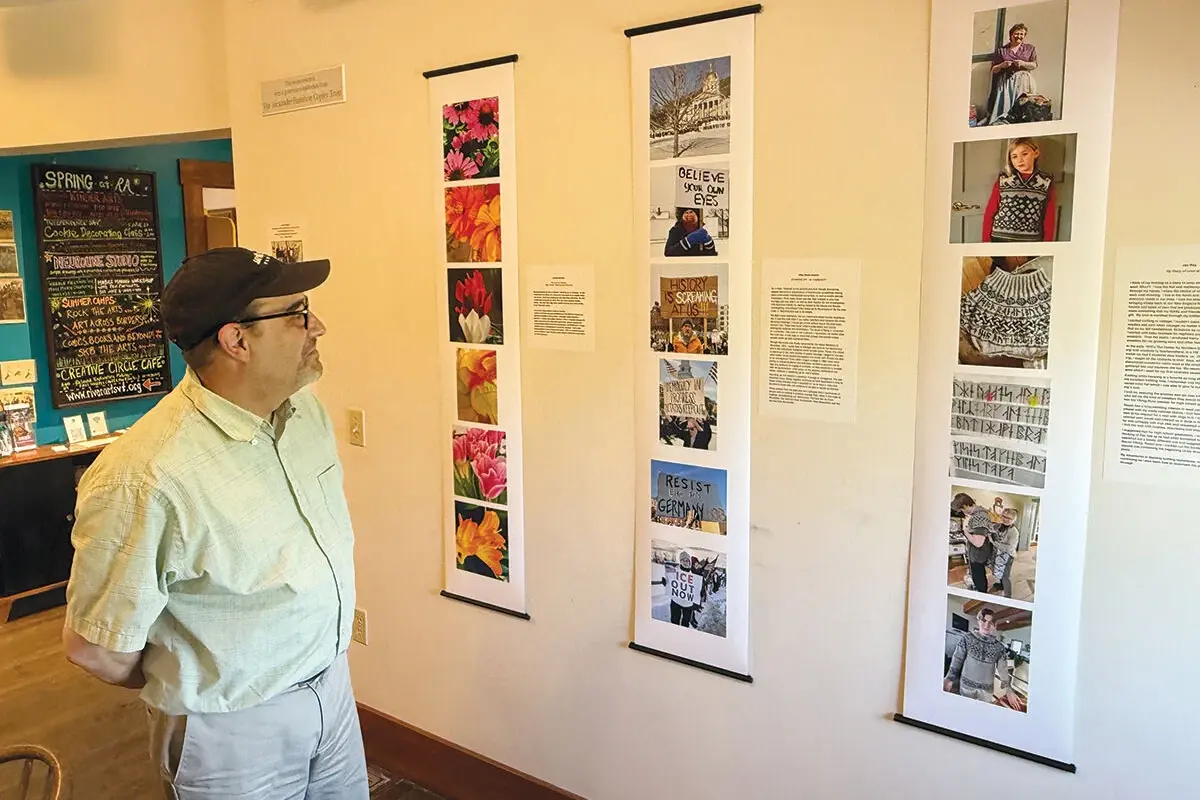
A quiet corner of the Morrisville Post Office recently became the center of a local debate over free expression after an art exhibit was pulled from the walls following complaints about its political nature. The installation, curated by the nonprofit River Arts, featured photography by Olea Smith-Caland, a Morristown resident who captured images of protesters gathered at the town’s central intersection. These gatherings have become a weekly fixture in the community since 2020, yet seeing them framed on the walls of a federal building proved too provocative for some patrons.
The photographs were part of a project through Lamoille Neighbors, a program designed to help older adults master iPhone photography. According to River Arts Executive Director Jonah Rabinowitz, the organization typically avoids a strict curatorial process for these displays, viewing them as a celebration of senior creativity rather than political statements. While many such exhibits feature gardens or family portraits, Smith-Caland focused her lens on the raw emotion and frustration of local activists. After several customers complained that the imagery was too political, the postmaster requested that certain pieces be removed.
Rather than censoring specific photographs to appease critics, Rabinowitz opted for an all or nothing approach and moved the entire collection to the River Arts headquarters on Portland Street. He noted that while he understands the post office must follow its own internal policies regarding neutrality, his organization defines objectivity through inclusion rather than exclusion. To fill the void left at the post office, a more traditional exhibit by artist Peggy Smith was installed to ensure the space remained visually engaging without sparking further controversy.
The relocation has not sat well with everyone in town. Some members of Lamoille Neighbors suggested that removing the work could constitute a violation of First Amendment rights. Despite those concerns, Rabinowitz remains measured in his response, stating that while he acknowledges the passion behind those claims, he does not believe the situation warrants an escalation into public protest. For now, anyone wishing to view Smith-Caland’s work can find it just a short walk away from where it once hung, shifting the conversation from a government lobby to a dedicated arts space.